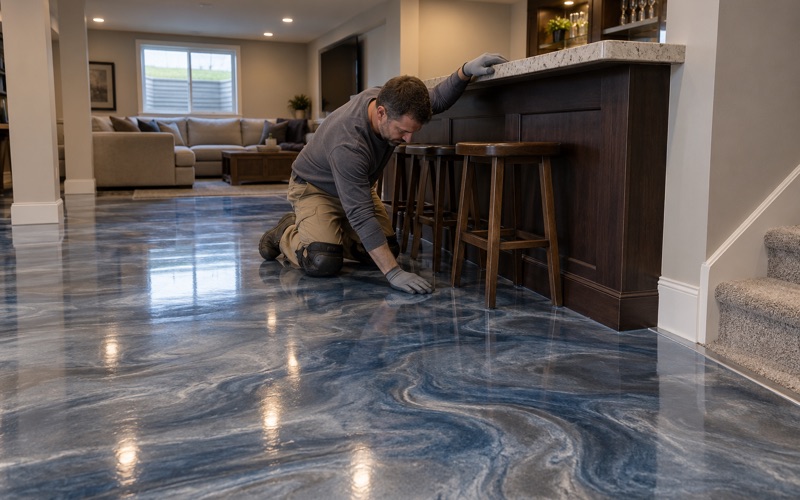
Ames Epoxy Flooring has spent more than 20 years on epoxy flooring in Huxley and across central Iowa, and the floors that teach us the most are the ones that already had a life before we arrived. A slab that once carried tile, carpet glue or a sealer is not a blank surface. Whatever sits on it decides whether a new coating grips or peels.
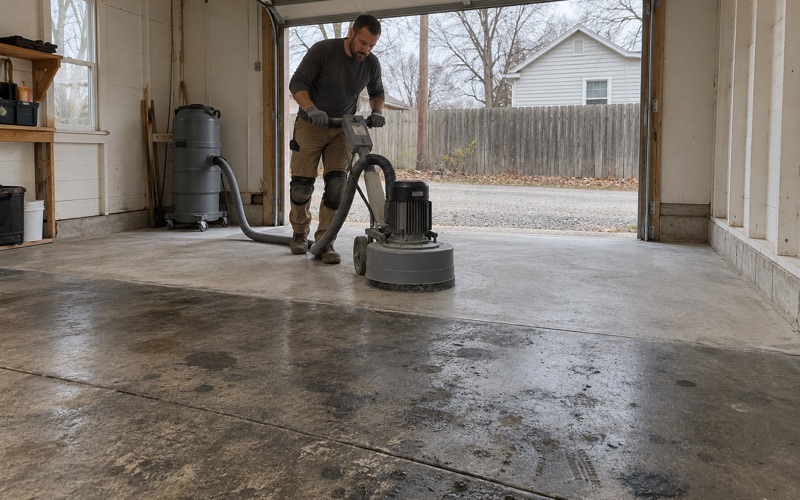
That is why our work starts with a map and a machine rather than a sales sheet. We mark every crack, spall, joint and patch of old coating, then open the concrete with a diamond grinder or a shot blaster. Acid etching never enters the scope, because it cannot lift a film of old adhesive and it leaves no measurable texture behind.
Before a price is final, the written scope includes a moisture test on the slab, whether it sits under a garage, a basement or a common hallway. Our proposal then names the product line, the number of coats and the finished thickness, so whoever owns the floor can hold the finished result against the paper.
Northpark Row and Floors Inherited Through a Change of Use
Huxley is adding buildings at a fast pace, but it is also reusing them, and reuse is where flooring decisions get harder. A converted building raises questions a fresh slab never does, because someone else has already lived on that concrete for years.
An Assisted Living Building Becomes Apartments
The clearest local example sits at 908 N US Highway 69. The building opened around 1999 as a Madrid Home for the Aging development, known first as Madrid Home of Huxley and later as Ballard Creek Assisted Living. Coterie Real Estate has converted it into Northpark Row, 38 apartment homes with no age restrictions, with a ribbon cutting set for October 13, 2026.
The broader project was awarded $1 million through Iowa’s Workforce Housing Tax Credit program in 2025, and the apartments are its first phase. We have no part in that project, and nothing published describes its floors or garages. We point to it because it shows the kind of building Huxley is now handing to new occupants.
What a Change of Use Leaves Behind
When a building moves from one use to another, its floors arrive with a history. A care setting, an office, a shop or a meeting hall each puts down its own coverings, then glues, seals, waxes and cleans them for years. Pull the carpet or the sheet goods up and the concrete underneath is rarely bare.
What usually remains is a patchwork of adhesive ridges, a sealer that soaked in unevenly, old paint stripes, wax build-up and cleaning residue worked into the pores. Each of those behaves differently under resin, and a few look like clean concrete until a coating is rolled over them. We treat every inherited slab as unknown until it has been opened and tested.
Why Huxley Sees More of These Floors
Half of Huxley’s homes were built in 2000 or later, so plenty of local slabs are fairly new. Reused space is a different stock entirely. Converted apartments, industrial flex units in the Huxley Business Park and any shop or office that changes tenants all pass a floor from one occupant to the next, and each occupant leaves a layer behind.
Looking for epoxy-flooring closer to Boone? See Boone Epoxy-Flooring.
Why Coatings Fail Over Old Adhesive and Sealer
A resin coating is only as strong as the layer it touches. If that layer is old mastic or a sealer, the bond of the new floor becomes the bond of whatever product a previous owner chose, and nobody can tell us what that product was.
Bonding to the Wrong Layer
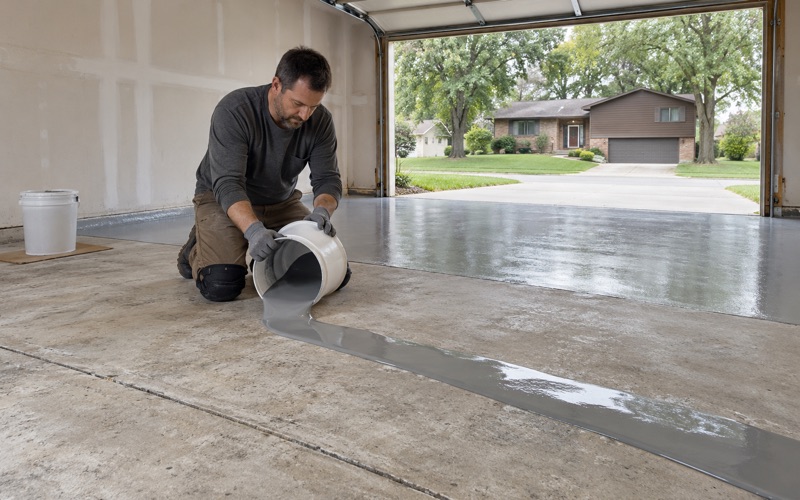
Epoxy and polyaspartic systems are built to lock into open, sound concrete. Laid over adhesive, they lock into the adhesive instead, and the adhesive was never designed to carry that load. The usual result is a sheet of coating that lifts in plates, often first where tires turn or where furniture gets dragged.
Solvents in a fresh primer can also soften some older glues, turning a hard residue into a gummy film that never fully cures. That kind of failure may not show for weeks. We refuse to coat over residue we have not removed, and we do not rely on a scraper alone to remove it.
Sealers, Curing Agents and Laitance
Sealers and curing compounds are made to keep liquid out of concrete, and they do that job against a new coating too. Laitance, the weak cement skin that forms at the top of a slab, is another hidden layer. Coating over it bonds the floor to a crust that can break away from the concrete beneath.
Sika’s epoxy application guide is blunt about this. It says to remove all existing paint, surface sealers, curing agents, dirt, laitance and loose, friable material mechanically, and to remove grease and oils from old and contaminated concrete. We follow the same rule, because wiping or washing these layers only moves them around.
Mapping Before We Quote
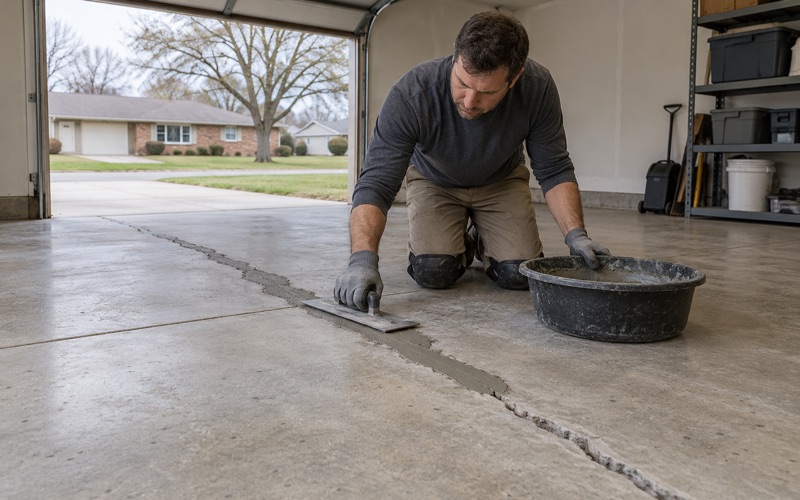
Our first visit to an inherited floor is a survey. We note where coverings ended, where glue lines run, where an earlier coating is peeling and where cracks or spalls need repair. Sometimes the honest answer is that a section needs patching or replacement before it should be coated, and we say so in writing.
Grinding or Blasting to a Measured Surface Profile
Removing the old surface and checking the slab underneath are two halves of one step. On a floor with a history, neither half is optional, and both are written into the scope before any resin is ordered.
Diamond Grinding and Shot Blasting
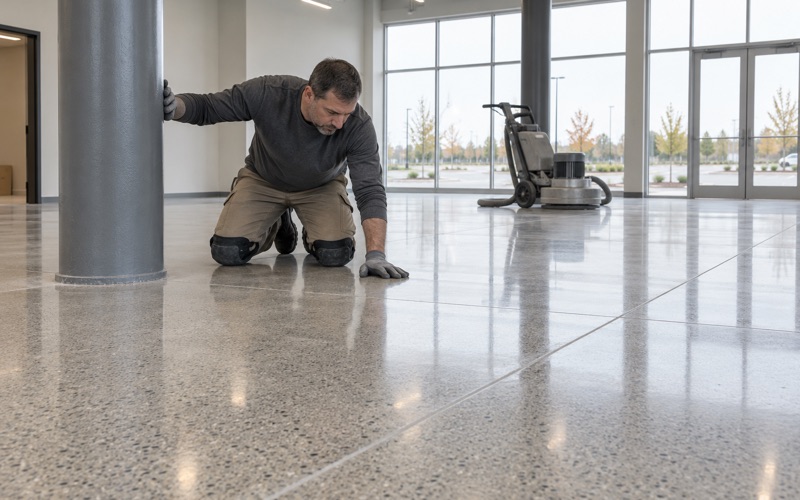
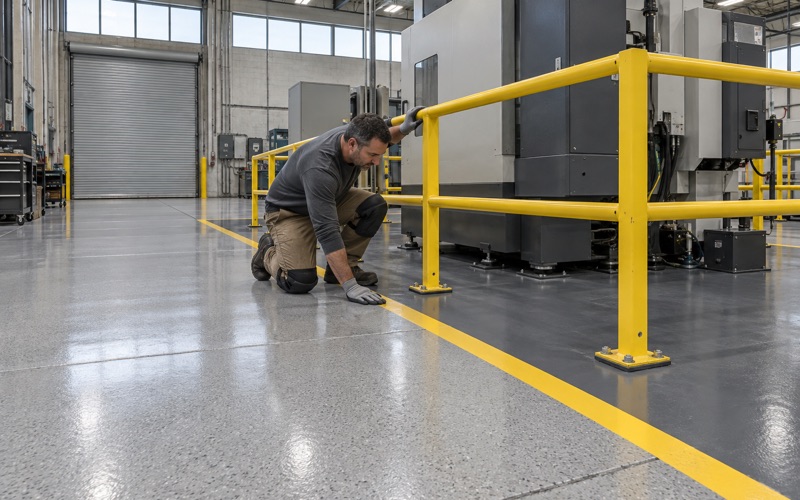
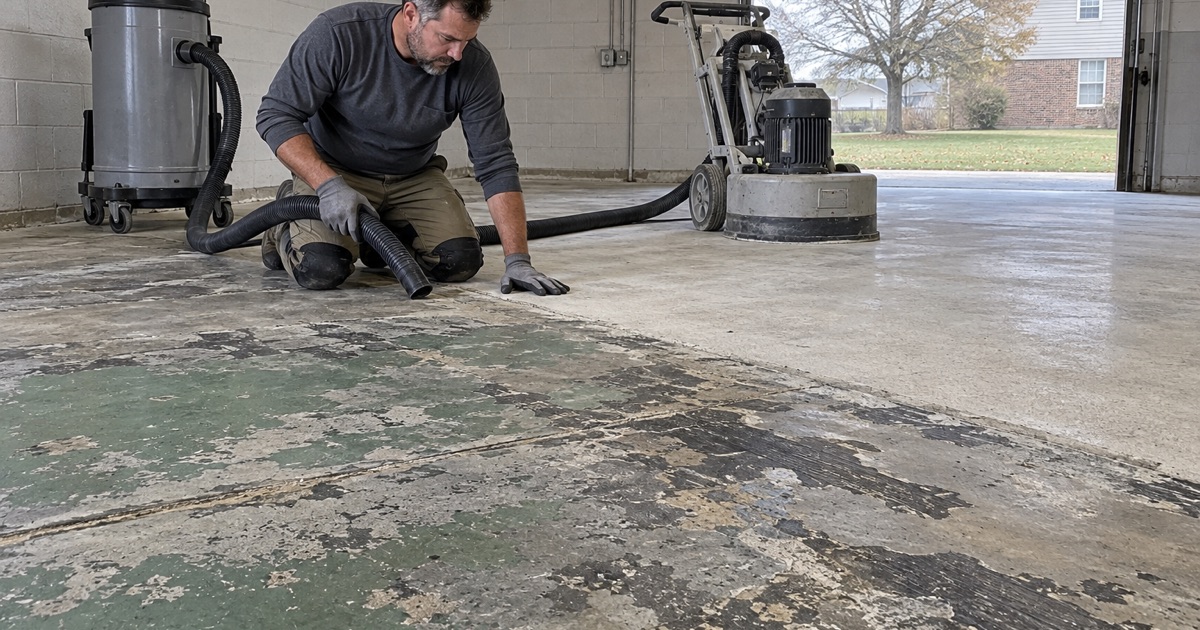
We open concrete mechanically and choose the machine by what we find. Diamond grinding suits thin films, edges and floors where adhesive needs to be cut rather than chipped, while shot blasting suits large open areas that need a uniform texture quickly. Both remove material, and neither leaves a chemical behind on the floor.
Dust is captured at the machine with a vacuum, so grinding residue is collected rather than rinsed toward a floor drain or a storm inlet. In an occupied building that also keeps fine dust out of hallways and shared air. Every trace of residue is vacuumed up before primer goes down.
What a Measured Profile Means
Concrete surface profile is graded on the ICRI CSP 1-10 scale, using reference chips that show what each texture should look like. Sika’s guide calls for a profile equivalent to ICRI CSP 3 for its epoxy systems, and a thicker build calls for a coarser one. We compare the prepared floor against the chips rather than judging by eye.
The point of measuring is accountability. When the proposal names a product line and a profile, the prepared floor can be checked against both before any resin is mixed. Where adhesion is in question, an ASTM D4541 pull-off test gives a number instead of an opinion.
Testing the Slab for Moisture
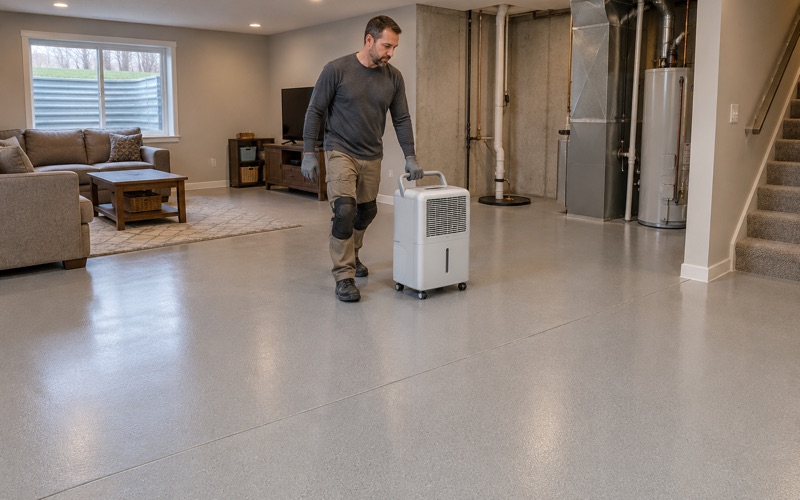
Sika’s guide asks for substrate moisture under 4 percent, with concrete at least 50 degrees F and 5.5 degrees F above the dew point. We test before the price is final, using ASTM F2170 in-situ relative humidity probes or ASTM F1869 calcium chloride testing, with an ASTM D4263 plastic sheet test as a quick screen.
Local ground gives that testing a reason. Soils around Huxley are glacial till on the Bemis moraine, with well-drained Clarion loam on the knobs beside poorly drained Webster clay loam in the swales, where the soil survey puts a seasonal water table near the surface. Two slabs in the same town can read very differently, so we test rather than assume.
What the Warranty Leaves Out
A coating is not a moisture fix. Before a job is sold we explain what our warranty excludes, and moisture vapor transmission and hydrostatic pressure come first on that list. If a reading comes back high, we talk through a moisture-mitigation primer or a delay rather than making a promise.
Coating a Reused Building’s Shared Rooms and Garages
Once the old surface is gone and the slab has passed its tests, the system is chosen for how each room will actually be used. A corridor, a garage and a kitchen ask different things of the same resin.
Corridors, Laundry Rooms and Common Spaces
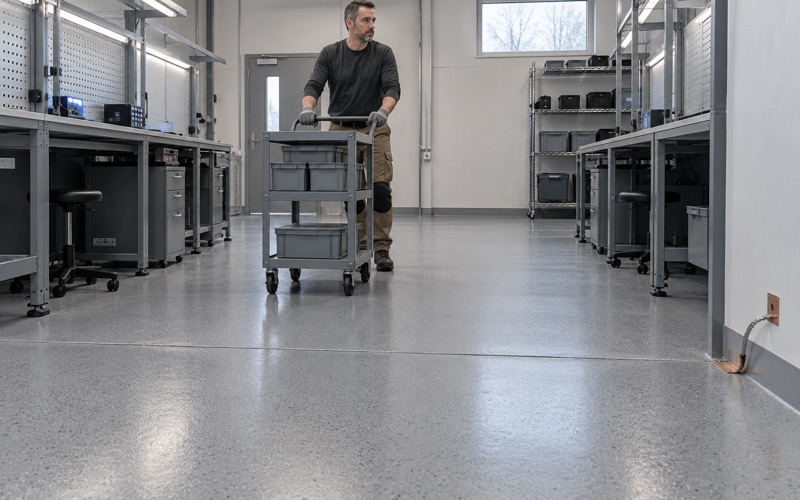
Shared rooms in a converted building take foot traffic, carts and wet mopping all day. A 100% solids epoxy body coat with a quartz aggregate broadcast and a polyaspartic or polyurea topcoat holds up to that, and an integral cove base turns the wall joint into a surface that cleans like the floor.
Slip resistance comes from the broadcast and the topcoat we specify, so the texture is written into the proposal instead of promised in a slogan. Low-odor products are available for occupied buildings as a comfort and re-entry choice, never as a legal requirement in Iowa.
Units and Lease Turnover
Apartments turn over on a schedule, and floor work has to fit inside it. We plan rental and multi-unit floors around lease dates, so a unit is prepared, coated and cured before the next move-in rather than during it. Cure times follow slab temperature and dew point, not the calendar.
Garages and Winter Salt
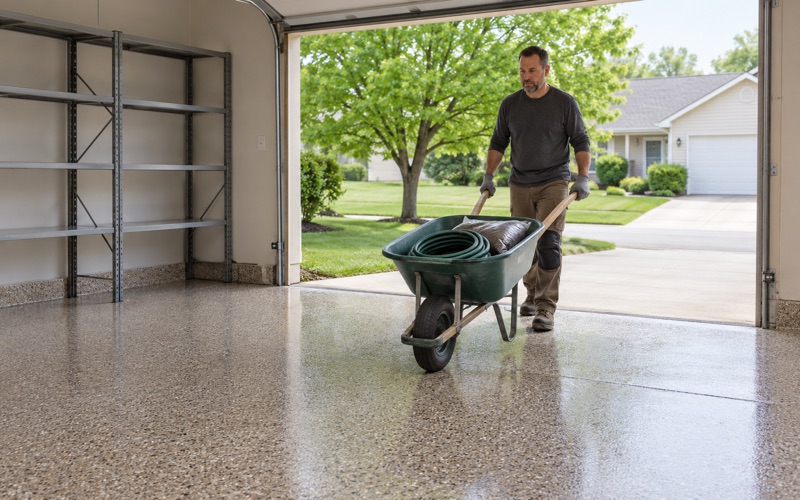
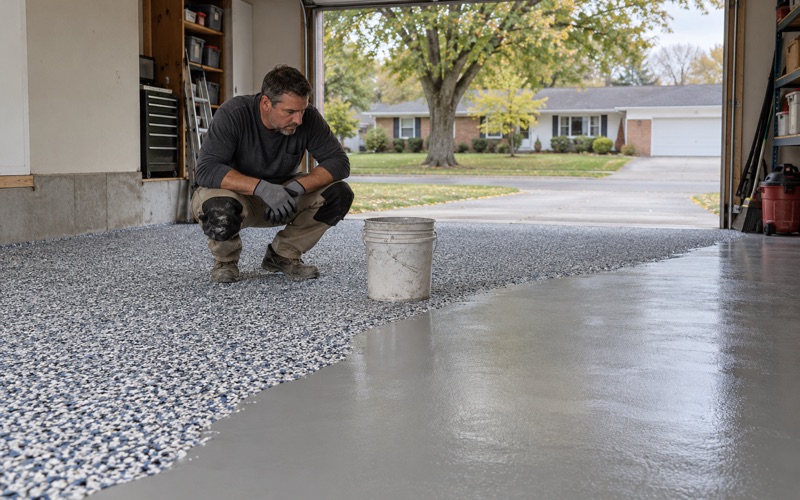
Garage slabs in Story County spend the winter under brine and rock salt carried in on tires. We choose garage systems to stand up to those deicers and to hot tire pickup, pairing a vinyl flake broadcast with a topcoat matched to the traffic the garage sees.
An unheated garage in a central Iowa winter is told to wait for a warmer slab, because resin laid on cold concrete cures poorly. Whether the building is new or reused, we test the slab whatever year it went up, because a newer structure is not automatically a drier floor.
Kitchens and Food Tenants
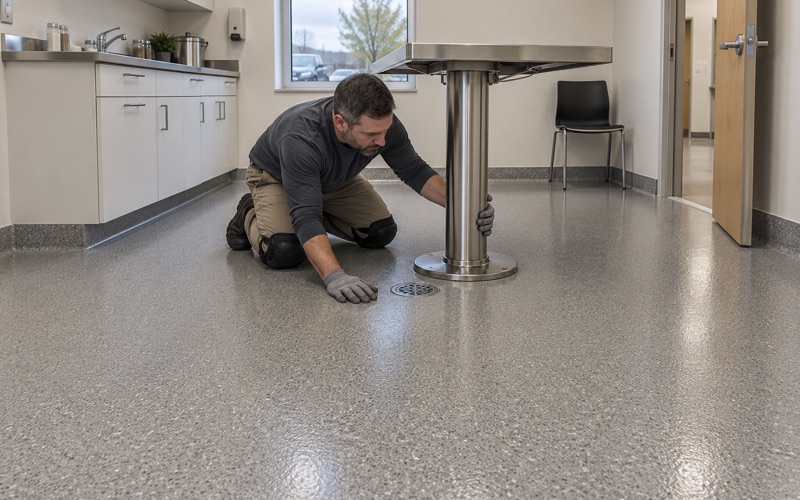
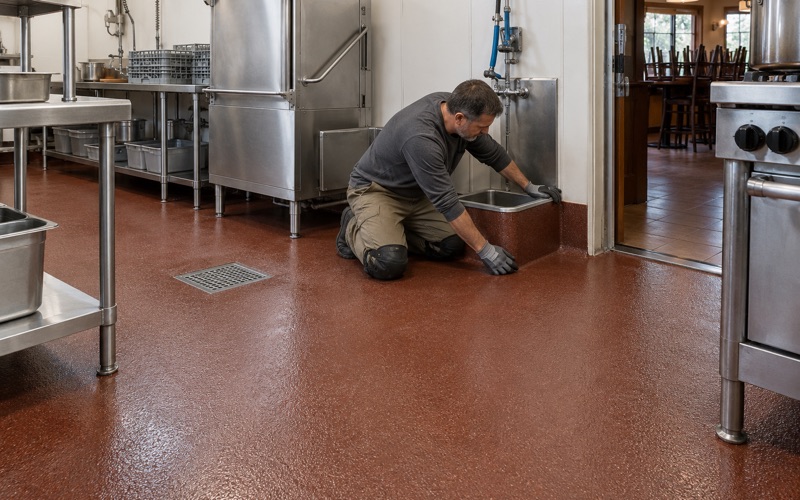
A reused building that takes on a restaurant or grocery tenant brings food-code rules with it. In Story County, Iowa DIAL inspects food establishments directly, and the 2017 FDA Food Code as adopted in Iowa calls for coved floor and wall junctures under 6-201.13. We build cove and drainage details into the scope from the start.
- 20+ Years on Iowa Concrete
- Moisture Tested in Writing
- Free Estimates