Ames Epoxy Flooring installs commercial epoxy flooring in Ames, IA, serving surrounding cities including Ankeny, Nevada, Boone, Polk City and Huxley. Commercial floors face more traffic, more cleaning and tighter schedules than residential ones, and they are often installed in buildings that cannot shut down while the work happens. That changes how we prep, which systems we recommend and how the job is sequenced.
We have spent more than twenty years coating central Iowa concrete, including retail spaces, offices, clinics, research buildings and rental properties. Each job starts the same way as a garage or basement: a slab walk, a moisture test and a map of cracks, joints and old coatings. The difference is in the scale, the phasing and the documentation a business or property owner needs.
Commercial Spaces We Coat
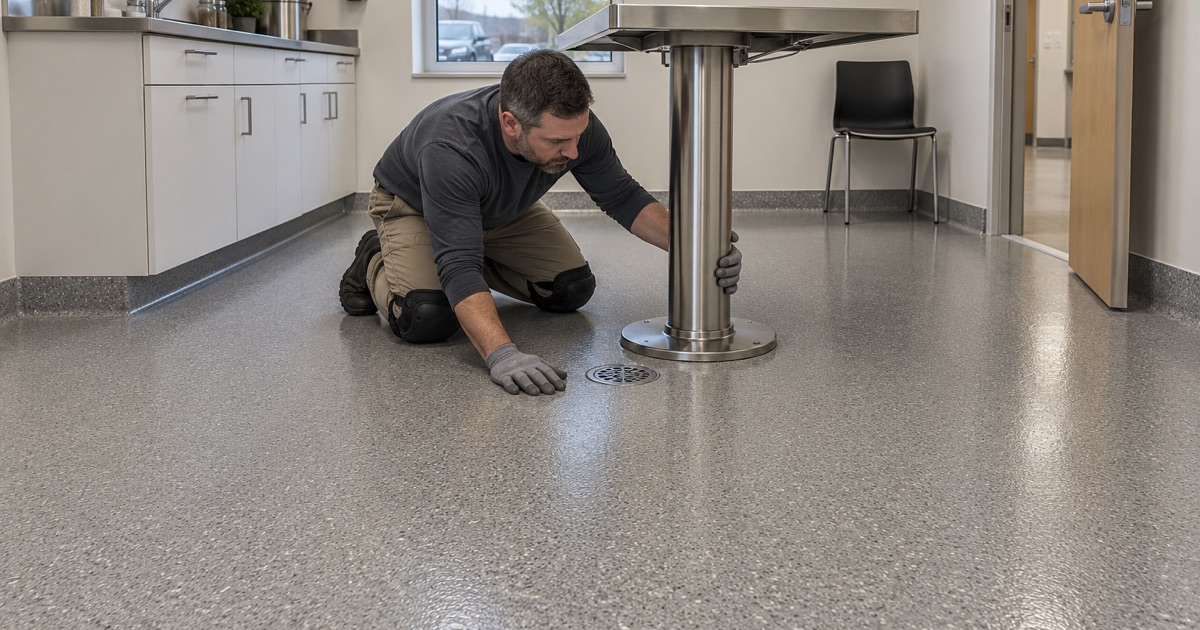
Retail Stores and Showrooms
Stores and showrooms need a floor that looks finished, cleans easily and holds up to carts, foot traffic and displays being moved. Flake, metallic and solid color systems all work, with a UV-stable topcoat near storefront windows where sunlight would amber a plain epoxy.
We pay particular attention to entrances, where winter salt and grit cause most of the wear. A textured topcoat at the door and a smoother finish deeper in the store balance grip with ease of cleaning.
Offices, Clinics and Service Counters
Offices, clinics and service businesses want a durable floor that does not look industrial. Fine-chip flake blends, solid colors in neutral tones and metallic finishes give a clean, professional look, and seamless coatings are easier to sanitize than tile with grout lines.
In clinics and medical offices, coatings can be run up the wall as an integral cove base so cleaning water cannot collect at the floor line. Work is scheduled after hours so patients and clients never see the crew.
Labs and Research Buildings
Research buildings need seamless, chemically resistant floors with integral cove bases and slip-resistant textures that stay safe when wet. In Ames, a USDA solicitation sought epoxy floor coating and repair for animal rooms at the National Centers for Animal Health, the kind of research space that demands this level of detail.
Lab work is phased around research schedules, often with overnight and weekend windows when experiments cannot be interrupted. The system is chosen for the chemicals and cleaning agents used in each room.
Rental Properties and Common Areas
Rental houses, duplexes and apartment buildings need floors that survive tenant turnover and can be refreshed quickly. Hallways, laundry rooms, basements and entryways in multi-unit buildings benefit from a seamless, easy-to-clean coating.
Ames rental inspections under Municipal Code Chapter 13 look for a nonabsorbent toilet-room floor surface, and a coated floor can help a bathroom meet that standard. We schedule rental work around lease turnover so each unit is ready before the next move-in.
Choosing a Commercial Floor System
Epoxy, Polyaspartic and Urethane Cement
Most commercial floors use a 100% solids epoxy base for build and bond, with a polyaspartic or polyurethane topcoat for abrasion and UV resistance. Where hot water, steam or harsh sanitizers are used, urethane cement handles the heat and chemicals better than epoxy.
We match the system to the room rather than using one product across the whole building. A single facility might need a decorative finish in the lobby, a textured system in wet areas and urethane cement in a wash-down room.
Slip Resistance by Specification
Slip resistance is set by the broadcast aggregate and the topcoat build, not by a promise. Quartz aggregate broadcasts give the most grip for wet areas, while fine texture additives in the topcoat suit dry areas that still need some traction.
The proposal states the texture for each area so it can be checked after installation. Smoother finishes are easier to clean, so we balance grip and cleanability room by room.
Integral Cove Base
An integral cove base carries the floor coating up the wall in a smooth curve, eliminating the seam between floor and wall where dirt and water collect. It is common in clinics, labs, restrooms and food areas, and it is often required by a specification or code.
Cove height and detail are set before the job begins, since they affect both the cost and the schedule. We build the cove from the same system as the floor so it cleans the same way.
Scheduling Around a Business
Phased, Night and Weekend Work
A business that cannot close gets its floor in phases. Sections are prepped and coated overnight or on weekends, and fast-curing polyaspartic topcoats shorten the time each area is out of service.
The phase plan is set out in the proposal, showing which areas close when and how long each needs before foot traffic and equipment return. We plan each phase so the space reopens when promised.
Dust, Odor and Occupied Buildings
Every grinder runs with an attached vacuum that captures dust at the machine, and work areas are sealed off from the rest of the building. Grinding dust is never rinsed toward a floor drain or a storm inlet.
The federal architectural coatings rule, 40 CFR 59 Subpart D, sets VOC limits for floor coatings, but compliant products can still carry an odor during installation. We offer low-odor options and plan ventilation for occupied buildings.
Moisture and Warranty on Commercial Slabs
Commercial slabs are moisture tested before pricing, using calcium chloride testing under ASTM F1869 or relative humidity probes under ASTM F2170 where a specification calls for them. The results decide whether a moisture-mitigation primer is needed.
Warranty exclusions for moisture vapor transmission and hydrostatic pressure are explained before the job is sold. On a large floor, that conversation can save a significant failure later.
- 20+ Years on Iowa Concrete
- Moisture Tested in Writing
- Free Estimates