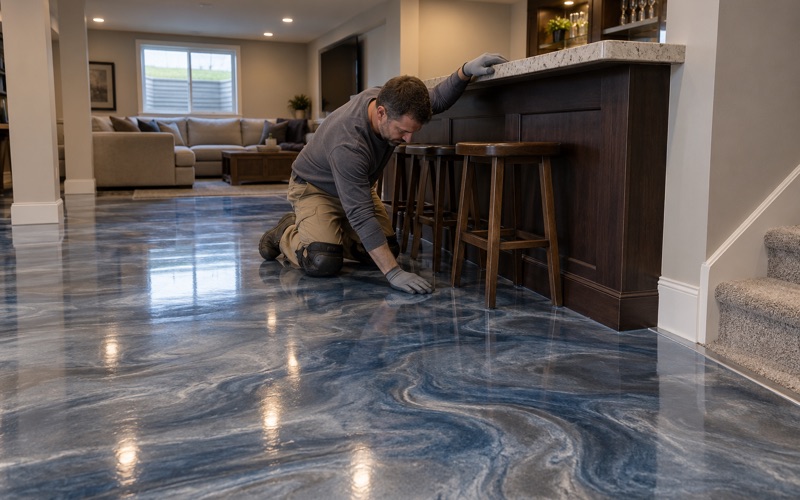
Ames Epoxy Flooring has done epoxy flooring in Boone for more than 20 years, and the floors we worry over most are the ones with something valuable sitting on them. That could be a garage holding a restored truck, a basement stacked with family boxes, or a back room where papers, photographs and objects are kept for decades rather than seasons.
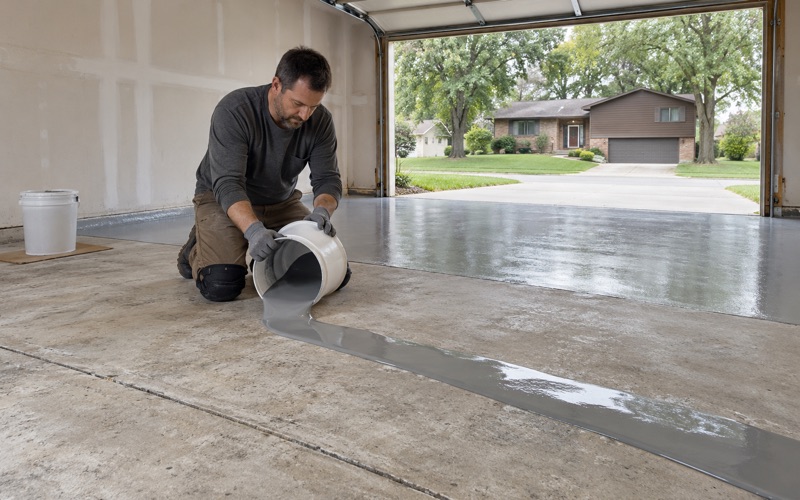
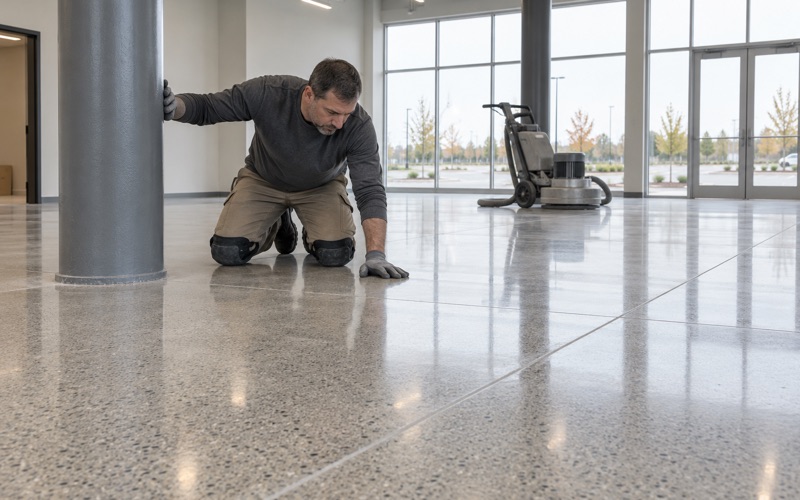
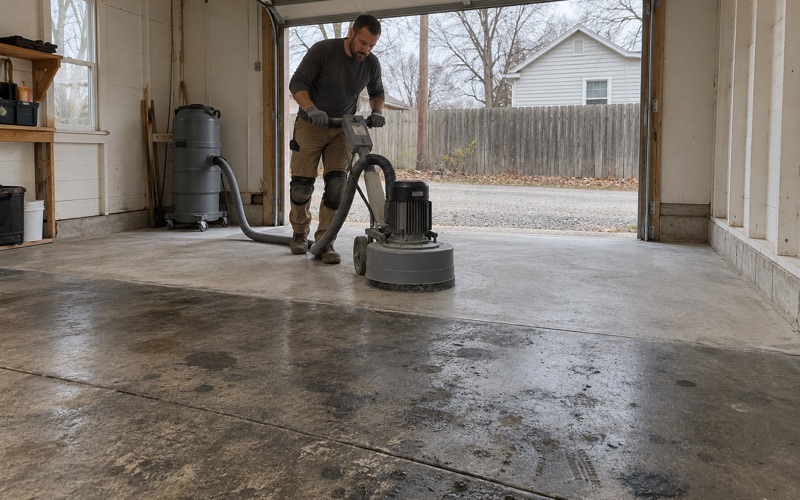
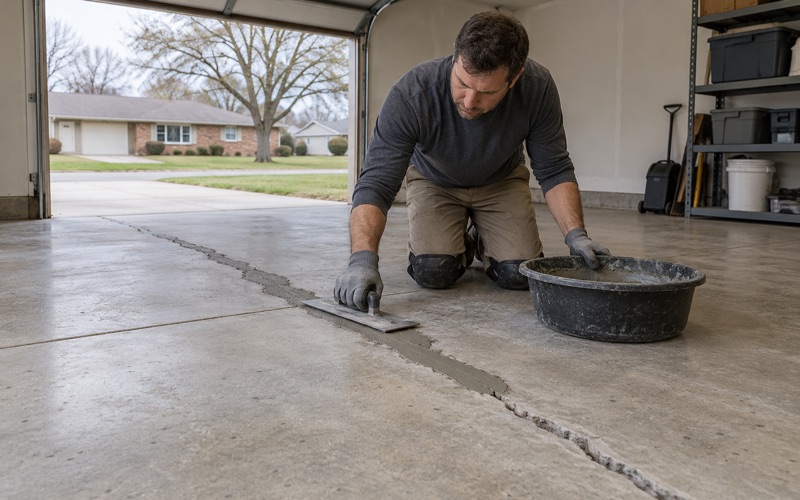
Every one of those jobs opens the same way. We cut a profile into the slab with a diamond grinder or a shot blaster, never an acid etch, and we map cracks, spalls, joints and any old coating before we talk about color. A moisture test goes into the written scope before the price is final, and if a slab should be repaired or replaced first, we say it plainly.
The proposal names the product line, the number of coats and the finished thickness, so the floor you end up with can be checked line by line against the quote. This page spends most of its length on one kind of room that matters in this town more than most: storage space where the floor’s own dust and cure fumes can harm what is kept there.
Boone’s Railroad Collections and the Buildings Behind Them
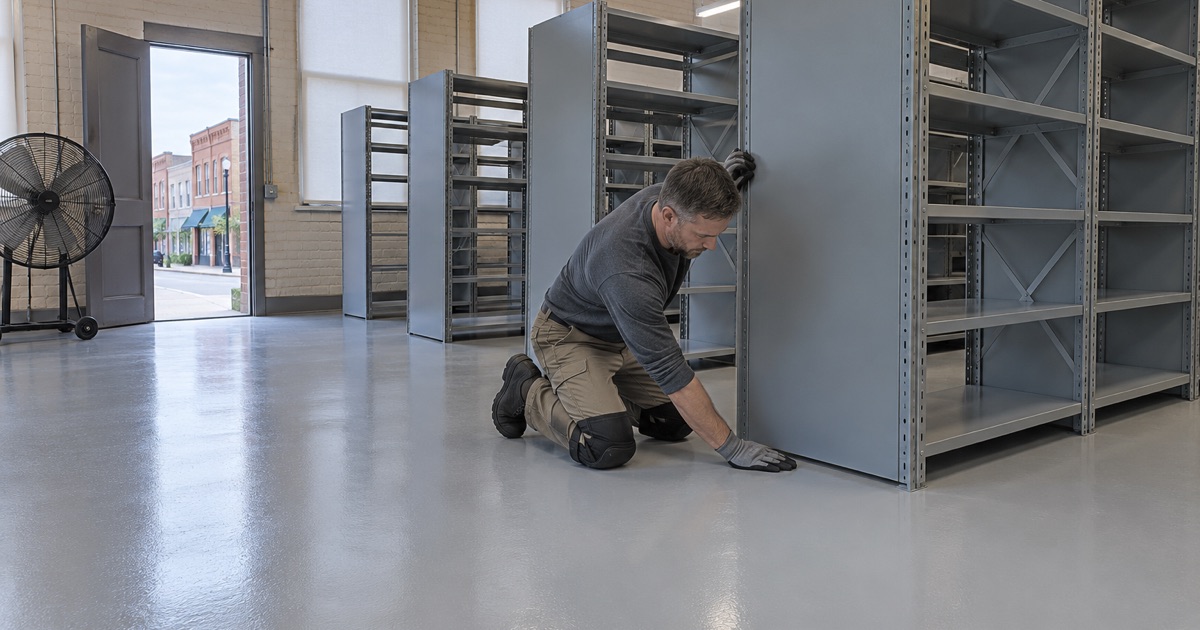
Boone is the county seat of Boone County, Iowa, and it carries its railroad past with unusual care. That history is not only out on the track. A lot of it lives indoors, on shelves and in boxes, which is exactly where a floor stops being background and starts being part of how the collection is protected.
A museum, a library and a lot of artifacts
The Boone and Scenic Valley Railroad has operated out of Boone since 1983, and the James H. Andrew Railroad Museum and History Center on its grounds opened in 2012. Alongside memorabilia and displays on Iowa railroading, it holds a research library and a theater. The railroad is not our customer, and we have never worked on its buildings.
We mention it because it shows the kind of room that deserves a careful floor. Paper, photographs, textiles and metal artifacts all react to what is in the air around them, and a concrete slab underfoot is one of the largest surfaces in any storage room. Whatever that slab gives off, the collection breathes for as long as it sits there.
A freight depot planned as artifact storage
In August 2020, KWBG reported that the railroad’s All Aboard! Capital Campaign won a state Community Attraction and Tourism grant. Among the planned projects was refurbishing a historic freight depot as climate-controlled storage for museum artifacts. We could not find whether that work has been completed or what floor it has, and we do not guess.
The plan itself is a useful example, though. Turning an older working building into artifact storage is common in railroad towns, and it raises the same question every time: what is the floor made of, what condition is it in, and what will it shed into a room that is supposed to keep its contents stable for years?
What an old freight slab can be hiding
Old industrial floors usually carry a long record. We expect patched cracks, spalled edges, oil soaked deep into the paste, and sometimes a coating nobody remembers applying. Each of those changes how the slab is prepared, and some of them decide whether it should be coated at all or repaired and replaced first.
That is why we map the whole floor before we price it. On an older building we look hard at joints and edges, check for old sealers that will block adhesion, and tell the owner when grinding alone will not produce a sound surface. A coating laid over a failing slab only hides the problem until it lifts.
Looking for epoxy-flooring closer to Polk City? See Epoxy-Flooring in Polk City.
Why Archivists Put Bare Concrete on the Avoid List
The Society of American Archivists publishes a list of products to avoid in archival, special collections and museum storage areas and exhibit cases. It is guidance written for architects and collections staff, not a rule and not a certification program. Even so, it is the clearest plain statement we know of about what a floor can do to a collection.
Fine, alkaline dust from the slab itself
The list names unsealed concrete because of its production of fine particulate, alkaline dust. Concrete wears at the surface under feet, carts and shelving, and the powder it releases is not neutral. It settles on boxes, folders and objects, and over years that alkaline dust is one more thing a conservator has to clean off and worry about.
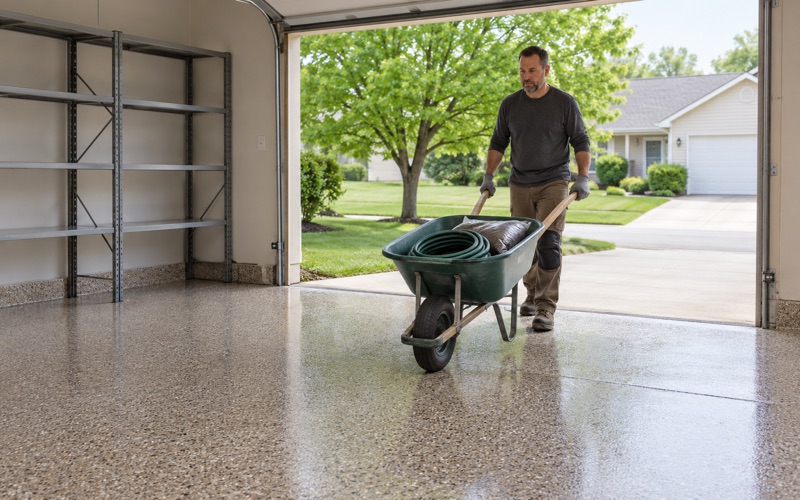
In a house the same thing happens on a smaller scale. A bare basement or garage slab dusts constantly, which is why stored boxes come out gritty after a few winters. Sealing the surface stops the wear at its source, and for anyone keeping family papers, photographs or heirlooms on a concrete floor, that alone is a reason to coat it.
What sealing changes, and what it does not
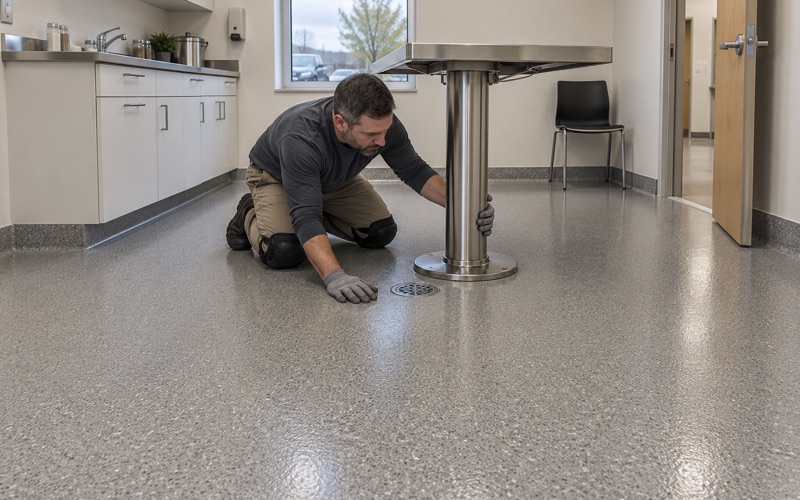
A properly bonded epoxy system locks the surface paste in place so the floor stops shedding. It gives a smooth surface that can be wiped clean, and it can carry an integral cove base where the floor meets the wall so dust does not collect in the corner. That is the whole benefit, and it is a meaningful one.
What a coating will not do is stop water. It is not waterproofing, it is not flood protection, and we never sell it as radon work, because radon testing and mitigation in Iowa take a state credential under Iowa Code chapter 136B. A collections room with a water problem needs that problem solved before any floor goes down.
Moisture testing on Boone’s mixed ground
Boone sits on Des Moines Lobe glacial till, and the soil survey maps well-drained Clarion loam on the rises next to poorly drained Canisteo and Coland-Spillville soils in the swales, some with the water table at the surface. Two slabs in the same town can sit over very different moisture, so we test every one regardless of age.
Depending on the slab, that means ASTM F2170 in-situ relative humidity probes, ASTM F1869 calcium chloride vapor emission testing, or an ASTM D4263 plastic sheet test as a first read. If the numbers are high, we discuss a moisture-mitigation primer, and we explain that moisture vapor transmission is the first exclusion on any coating warranty.
Picking a Low-Emission Floor System for a Collections Room
Once a slab is sound and dry enough, the next decision is chemistry. A room meant to hold artifacts or archives should not swap one problem for another by trading concrete dust for a coating that keeps releasing vapors. That is where product choice matters more than appearance.
Avoiding high-VOC self-leveling compounds
The archivists’ list warns specifically against self-leveling floor compounds that contain high levels of VOCs, and it says to avoid high-VOC products in general. Leveling is often part of renovating an old floor, so the underlayment deserves the same scrutiny as the coating on top of it. We pick both with that in mind.
The same list also names amine-based products, flagged there for human-health reasons. Many epoxy hardeners are amine chemistry, so we walk through what is in the system we are proposing rather than glossing over it. For a homeowner, our low-odor products are a comfort and re-entry choice, not something Iowa law requires.
What we propose instead
For a storage room we lean toward 100% solids epoxy or a low-emission water-based system, finished with a topcoat matched to the traffic. Informal conservation discussions have long described cured two-part water-based epoxies as among the sealers that present the least off-gassing trouble. That is practitioner opinion, not a standard, and we present it that way.
No archival body approves or certifies floor coatings, so nobody can honestly sell you an approved product. What we can do is give you the product data, explain the tradeoffs, and let the person responsible for the collection make the call with full information instead of a sales pitch.
Data sheets in hand before the work starts
The Society of American Archivists list expects contractors to submit safety data sheets and technical data sheets for listed materials so the architect can approve them. We hand those over for every product in the system, primer through topcoat, before anything is mixed. That way the review happens on paper, not after the room smells.
The proposal also states the number of coats and the finished thickness. If the room needs texture for safe footing near ladders or carts, we specify it by the broadcast and topcoat, such as a fine quartz aggregate broadcast, rather than promising slip resistance as a slogan. Every choice is written down so it can be checked.
Cure and Air-Out Before Anything Goes Back on the Shelves
The last step is the one people most want to rush. A floor that feels dry to the touch is not finished curing, and a room that still smells of coating is still releasing what the collection should not be absorbing. Patience at the end protects everything that was spent getting there.
Cure by temperature and dew point, not the calendar
We schedule cure by slab temperature and the dew point spread at the surface, not by a date on a calendar. A cold slab cures slowly and can develop amine blush, and an unheated building in a central Iowa winter is told to wait. That applies to an old depot and a home garage alike.
One sealant data sheet quoted in a museum forum gives full cure as 7 to 14 days or longer, depending on conditions. That is one product, not a rule. No single agreed wait between coating and collection move-in exists, so we give a realistic window for the specific system and room instead of a fixed number of hours.
Letting the air clear before collections return
The archivists’ guidance asks for sufficient lag time between construction and collection installation to allow the HVAC system to clear cure-related emissions. In practice that means running the ventilation, keeping the room empty, and only then moving shelving and boxes back. The floor has to air out, not just harden.
We plan that gap into the schedule from the beginning so it is not treated as a delay. When the room returns to service, the floor is sealed, cured and quiet. Grinding dust from our own prep is captured at the machine with a vacuum, never rinsed toward a floor drain, so we do not leave behind a fresh layer of the dust we came to stop.
Home collections in an older town
Boone’s housing skews old: 39.3 percent of its homes were built in 1939 or earlier, and most are detached and owner-occupied. Those basements and garages often hold the family version of an archive, from letters to tools to railroad keepsakes, sitting on bare concrete that has been dusting for generations.
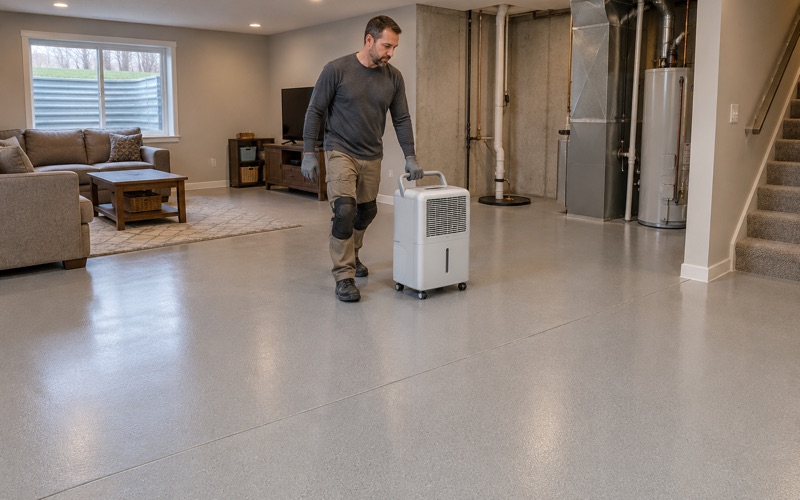
The same approach scales down. We read a basement for past water first, checking the sump pit and floor drain, because a coating does not stop seepage. Then we grind, test, seal with a low-odor system and give the room time to clear before the boxes go back down. A newer house gets the same moisture test, because age alone proves nothing.
- 20+ Years on Iowa Concrete
- Moisture Tested in Writing
- Free Estimates